Woelk: Buffs' Improvement Has Come Across The Board
September 29, 2016 | Football, Neill Woelk
CU has taken solid strides at virtually every position
BOULDER — With four games — one-third of the regular season — now in the books, we have enough of a sample size to begin getting a good bead on the Colorado Buffaloes.
Safe to say, it's an impressive sample. The 3-1 Buffs, who play host to Oregon State on Saturday at Folsom Field (12:30 p.m., Pac-12 Networks), have put themselves on the national radar after thumping in-state rival Colorado State, rolling past Idaho State, holding a third-quarter lead at Michigan and then collecting a come-from-behind win at Oregon.
It's been enough to turn plenty of heads, and now folks from the outside just starting to take notice are asking, "What's different?"
The short answer is "Just about everything."
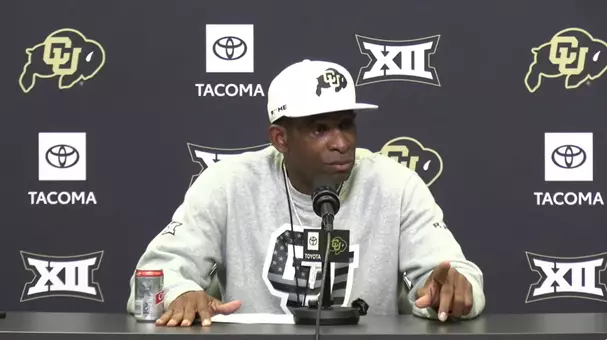
But that's technically not true. Fact is, much is still the same. The vast majority of the players on the field are the same players who were in uniform a year ago — and in many cases, two years ago. The difference is how much they improved over the offseason and into fall camp. Head coach Mike MacIntyre spent the entire offseason telling anyone who took the time to listen that those one-time youngsters were now veterans, and they would reap the benefits of their experience this year.
But not many people outside the CU locker room truly expected this kind of step forward, particularly in so many different areas.
Here's quick look at a few places where the Buffs have taken some major strides:
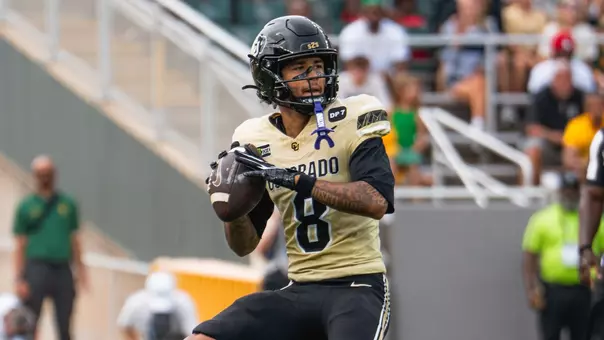
Wide receiver — It's not often a position loses the all-time conference leader and gets better, but thus far, that's exactly what has happened at wideout for the Buffs.
Colorado's four top receivers this season — Devin Ross, Shay Fields, Bryce Bobo and Jay MacIntyre — all played a year ago. CU coaches were quietly confident that all four would improve.
But not only have all four have improved, all four have taken significant steps forward.
Ross, a player whose inconsistencies had been his bane, has become the Buffs' most dependable receiver. Bobo has also made consistency a part of his game, particularly in or near the end zone, where he has become a money player. Fields is a legitimate long-ball threat, averaging an eye-popping 20.8 yards per catch, and MacIntyre has turned into a dependable safety valve — always open over the middle — as well as a solid downfield blocker.
Most people expected one or two of CU's receivers to improve. But no one could have predicted all four becoming the big threats they've become (and you can also throw Kabion Ento in this mix). Four different receivers have caught at least 10 passes and four have at least one catch of 50 yards or more, a problem for opposing defensive coordinators who have been accustomed to shutting down CU's passing attack by containing one or two receivers.
Part of the improvement can no doubt be attributed to experience, still the best teacher. But the CU receiving corps has also benefitted from the tutelage of wide receivers coach Darrin Chiaverini, who has found a way to challenge each of them on an individual basis. The fact that every CU receiver has improved is a testament to his coaching abilities and his knack for connecting with them at a one-on-one level.
Offensive line — Here's an area the Buffs expected to improve simply through experience. While injuries were a huge problem a year ago, the slight silver lining meant a number of young players got some valuable experience.
But again, the Buffs have improved more than most expected. Left tackle Jeromy Irwin, expected to be the anchor, has lived up to expectations. But the Buffs have also received consistent play from guards Gerrad Kough and Tim Lynott, the expected production from senior center Alex Kelley, and have developed an interesting one-two punch at right tackle with Sam Kronshage and Aaron Haigler.
A year ago, CU gave up 41 sacks, an average of more than three per game. This year, they've given up just eight in four games, an average of two per game. But even more telling is the number of sacks per pass attempt. Last year, CU opponents averaged a sack for every 11.3 CU attempts. This year, that number is one for every 16.2.
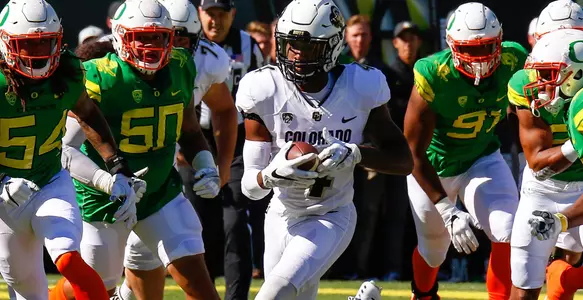
The Buffs' line has also been impressive in the running game, producing three games of at least 250 yards rushing. But even more importantly, they've done it in a Pac-12 game against a quality team (260 vs. Oregon). To put that into perspective, figure this: since entering the Pac-12, Colorado had produced exactly one 250-yard rushing effort in 45 conference games — and that came in 2011. Since then, CU had gone 38 straight conference games without hitting the mark.
Again, experience has no doubt made a difference. But the addition of Klayton Adams up front as the coach has also had a positive effect. A former lineman, Adams has connected with the players and the results have been solid thus far.
Secondary — Yes, the Buffs were supposed to be good here; in fact it was deemed as probably the best area on the team heading into the season.
But so far, they've lived up to expectations and maybe more. They've improved their opponent completion percentage (57.2 percent last year, 52.2 thus far this year) and they're averaging an interception per game. But maybe most importantly, the opponents' average per attempt has dropped considerably: from 6.52 yards to 4.87. They've also helped limit opponents to just 6-for-38 on third-and-5 or longer.
Buffs fans knew Chidobe Awuzie would be good, and he hasn't disappointed. Ditto for safeties Tedric Thompson and Ryan Moeller. But cornerbacks Isaiah Oliver and Ahkello Witherspoon and safety Afolabi Laguda have been excellent thus far, making it even more difficult for opponents to put together sustained drives. Kudos here to assistants Joe Tumpkin and Charles Clark, who have built a secondary as good as any in the Pac-12.
Defensive line — With the return of Josh Tupou, most folks figured the Buffs would improve dramatically up front, and they haven't disappointed. After giving up nearly 200 yards per game rushing a year ago (198.7), the Buffs have cut that number down to 143.5 per game. Only one opponent, Oregon, has surpassed the 200-yard mark.
The result is teams are throwing more against the Buffs when they can't run — one reason CU' pass defense numbers haven't improved dramatically in terms of yardage. They're simply seeing more balls in the air.
But another effect is down and distance. When opponents can't run, they're being forced into third-and-long situations, a good scenario for a team with a solid secondary.
Tupou has no doubt been a major boost. He makes the middle of the line virtually impenetrable and he can literally push the pocket. But the men alongside him, Jordan Carrell and Samson Kafovalu, are also having outstanding years. The two have combined for 34 tackles and 4.5 sacks and have been playing the run and pass equally well — a credit to line coach Jim Jeffcoat.
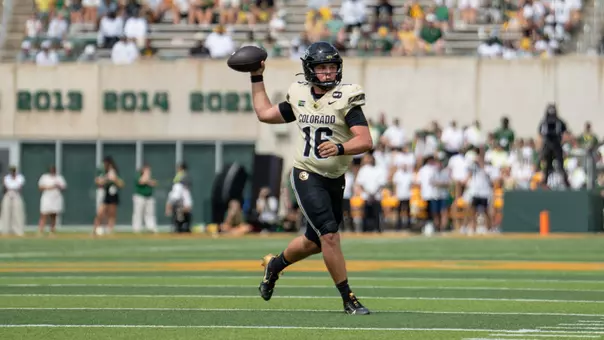
These are just several areas that have improved even more than people may have expected. Truth is, the Buffs are better in every area. Sefo Liufau has had an outstanding start at quarterback and backup Steven Montez had his already-legendary starting debut, both a credit to quarterbacks coach Brian Lindgren. The running backs have upped their yards-per carry from 3.75 to 4.27 with Darian Hagan at the helm and CU's linebackers (under the direction of defensive coordinator Jim Leavitt) are playing well on the outside and inside, with Kenneth Olugbode and Rick Gamboa dominant inside.
It's a credit to position coaches as well as the coordinators. They've done a good job thus far of putting players into position to do their jobs.
But as MacIntyre has said repeatedly, "Players make plays and players win games," and he's constantly reminded us that the Buffs have players who can win games.
The difference is, now people are listening.
Contact: Neill.Woelk@Colorado.edu