No Spring Ball More Than Just Missed Practices For Dorrell, Buffs
April 07, 2020 | Football, Neill Woelk
BOULDER — With college athletic departments across the nation now literally on hold — and no idea when the chance to resume anything close to "normal" activities might occur — it's easy to think all college football programs are in the same boat.
But the truth is, not all of those boats are floating in the same waters.
Yes, every football program is trying its best to keep players engaged in a time when organized activities are not allowed.
It means strength coaches like Colorado's Drew Wilson are sending out improvised workout programs to players, encouraging them to take advantage of whatever kind of equipment they may have available.
It means coaching staffs are meeting online and in small groups when possible. They are watching film, implementing schemes and meeting with players online for the period of time allowed by the NCAA for "instructional" periods.
Meanwhile, those same coaching staffs are covering every base possible in recruiting. They are trying to stay in touch with prospects, gathering every bit of information possible on those prospects and making scholarship offers.
But while every program is trying to adjust to the circumstances created by the COVID-19 pandemic, there are already some inequities created by the timing of the shutdown of organized team activities.
For starters, some programs had already started spring ball. Some programs, such as Arizona State and Colorado State — both of whom are on Colorado's schedule next fall — were able to get in nearly half of their spring workouts before the shutdown.
Others, like Colorado, never saw the practice field.
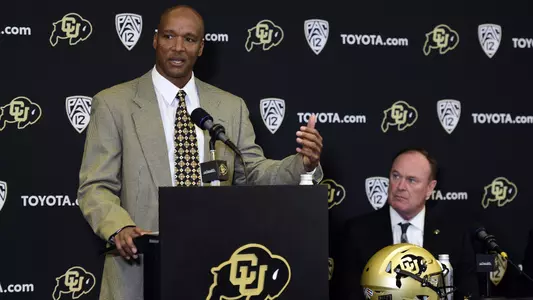
But in the case of the Buffaloes, the situation is even more damaging because CU is operating with a new head coach. Karl Dorrell was hired Feb. 23, meaning he barely had a chance to introduce himself to his players before team activities were shut down.
Dorrell is one of 24 new FBS coaches to take over a program in the offseason. While he has made it clear that he won't use that as an excuse, it no doubt has made preparing for next season — if one does come about — far more difficult than it would have been under normal circumstances.
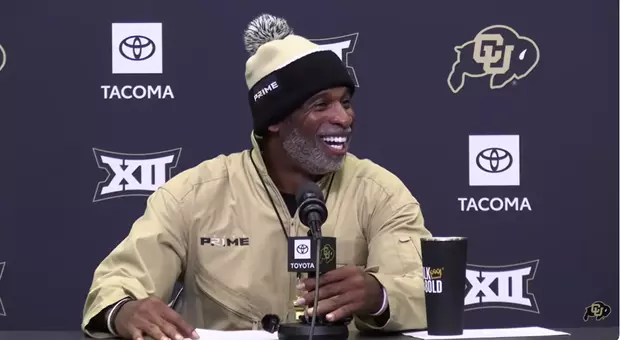
"I'm not looking at it as a detriment just because I'm new," Dorrell said in a recent press conference. "Everybody's dealing with this. I know there's some institutions that may have already finished spring or are maybe halfway through, or maybe in the first week, who knows. I know that they're all under the same guidance and standards of what's going on right now with our country."
According to the Pac-12 Hotline's Jon Wilner, eight Pac-12 teams got in at least one week of spring practice with another, USC, getting in one practice. Three Pac-12 schools — Colorado, Washington State and Washington — did not hold a single spring practice.
Coincidentally, all three of those programs are under the direction of a new head coach: Dorrell at Colorado, Nick Rolovich at Washington State and Jimmy Lake at Washington.
But it's more than just the actual practice time that can set a new head coach back. It's also the process of establishing a culture within the team. Players have to get to know the staff and what will be expected of them. They have to become familiar with the expectations and demands that will be required — and it's a process that can only take place over time.
It's certainly an issue that has caught the attention of Colorado Athletic Director Rick George.
"I don't want to sound selfish, but we've got a football coach that was only hired three or four weeks ago and built his staff a couple weeks ago," George told the media last week. "He really hasn't had the opportunity to build the culture that you want and all the things around it. I don't know if it's practice that is so important as much as it is creating that culture that you have with your football team. It's very difficult to do when you do it virtually (online)."
As it stands now, nobody has any idea when — or if — college football programs will be allowed to resume team activities. The Pac-12 has suspended all such activities through at least May 31, although conference officials said they will meet and reassess that situation on May 1.
But whether it's an abbreviated early summer session, an extended fall camp or a late fall camp and shortened season, Dorrell said he and his staff are preparing as best they can to make sure the Buffaloes hit the ground running when they finally get permission.
"From our perspective, we're just going to try to maximize whatever chance we get with our players," Dorrell said. " We'll be prepared for that. We'll get a chance to quickly implement what we need to get implemented and still keep our team in shape and keep them strong and excited about playing … There's still some time for a lot of stuff to occur and I know that there's going to be some limitations of some sort, but we're prepared for it. I think we've talked about all those scenarios, and we're not going to use any excuses. We're going to go out there and put our best foot forward and get our team ready to play our first game when that September date hits."
George, meanwhile, said there will be plenty of discussion about a "level playing field" when activities can resume, to make sure every program receives the same number of practice and instructional opportunities.
"We're certainly going to look at all of that," George said. "But again I think because of the time frame and when this could potentially start back up again, there's going to be a lot of questions and a lot of framework and a lot of modifications that will need to take place to create that balanced playing field."
Here's a look at the 24 new FBS head coaches and how many spring practices they were able to get in (if any), as well as a look at what happened across the Pac-12 (courtesy of Wilner's research):
2020 FBS PROGRAMS WITH NEW HEAD COACHES
Rutgers, Greg Schiano — no spring practices
Florida State, Mike Norvell — three practices
Arkansas, Sam Pittman — no spring practices
New Mexico, Danny Gonzales — five practices
UNLV, Marcus Arroyo — no practices
Missouri, Eli Drinkwitz — one practice
UTSA, Jeff Traylor — no practices
USF, Jeff Scott — no practices
Boston College, Jeff Hafley — four practices
Ole Miss, Lane Kiffin — no practices
Old Dominion, Ricky Rahne —no practices
Washington, Jimmy Lake — no practices
Colorado State, Steve Addazio — seven practices
Fresno State, Kalen DeBoer — no practices
FAU, Willie Taggart — no practices
Memphis, Ryan Silverfield — no practices
Appalachian State, Shawn Clark — finished four weeks
Mississippi State, Mike Leach — no practices
Baylor, Dave Aranda — no practices
San Diego State, Brady Hoke — one week of practice
Washington State, Nick Rolovich — no practices
Hawaii, Todd Graham — no practices
Michigan State, Mel Tucker — no practices
Colorado, Karl Dorrell — no practices
PAC-12 SPRING PRACTICES
Arizona State — Two weeks completed (seven practices)
Stanford — Two weeks completed
Utah — One week completed (three practices)
Arizona — One week completed
Oregon State — Two weeks completed (five practices)
UCLA — One week completed
Cal — One week completed
Oregon — One week completed
USC — One practice
Colorado — No practices
Washington State — No practices
Washington — No practices
Contact: Neill.Woelk@Colorado.edu