July 29, 2026 | Football
The Day Colorado Shocked the Nation and Changed College Football
"Pesavento... giving to Brown."
Every Colorado fan of a certain generation can still hear Larry Zimmer's voice.
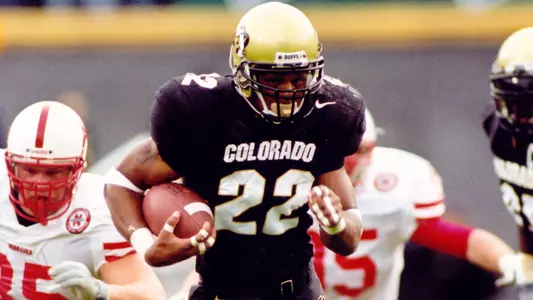
As Chris Brown burst through the line, Zimmer's call rose with every stride.
"Brown pushes a man... five... he's in... touchdown number six!"
By then, the celebration inside Folsom Field had already begun.
Brown's sixth rushing touchdown of the afternoon put an exclamation point on one of the greatest performances in Colorado football history—a 62-36 dismantling of No. 1 Nebraska that remains one of the defining moments not only in Buff history, but in the history of college football.
Around Boulder, those two numbers need no explanation.
As Colorado celebrates 150 years of statehood with a countdown of the Top 150 Moments in Colorado Sports History, few moments better capture the excitement, significance and lasting impact of sports in the Centennial State than what unfolded on Nov. 23, 2001.
The scoreboard told one story.
The ripple effects told another.
Officially, Colorado clinched the Big 12 North Division championship and revived its national championship hopes. Unofficially, the Buffaloes authored a game that helped expose flaws in college football's postseason system, accelerated the conversation that eventually led to the College Football Playoff and marked the beginning of the end of one of the sport's greatest dynasties.
The score may have stunned the nation.
Inside Colorado's football offices, it wasn't nearly as surprising.
"We had a really good plan against Nebraska," former head coach Gary Barnett recalled. "We blocked them and then we ran through them."
That confidence had been building for weeks.
Colorado had rediscovered its identity following a convincing victory at Iowa State and entered the regular-season finale believing it matched up well with the nation's top-ranked team. The Buffaloes had endured years of heartbreaking losses to Nebraska, but inside the locker room there was little fear.
"No one was scared of Nebraska at all," Barnett said. "We knew we could play with them at any time."
From the opening kickoff, Colorado backed up that confidence.
The Buffaloes raced to a stunning 35-3 lead early in the second quarter, overwhelming the nation's No. 1 team in every phase. It wasn't merely an upset. It was a dismantling.
While Brown's six rushing touchdowns became the lasting image of the afternoon, the offensive performance was remarkable from start to finish.
Colorado rushed for 380 yards and eight touchdowns against one of the nation's premier defenses.
Brown carried 24 times for 198 yards and six touchdowns, one of the greatest individual performances in school history.
Bobby Purify added 154 yards on 20 carries and another touchdown, giving Colorado two 150-yard rushers against a Nebraska defense that had built its reputation on stopping the run.
Through the air, Daniel Graham delivered another signature performance during his Mackey Award-winning season, hauling in four receptions for 112 yards and a touchdown while helping Bobby Pesavento orchestrate one of the finest offensive performances in Colorado history.
And while the offense stole the headlines, Colorado's defense was every bit as dominant.
The Buffaloes intercepted two passes, forced three fumbles and broke up six more passes, repeatedly taking the ball away and frustrating an offense that entered the afternoon averaging more than 42 points per game.
The numbers remain staggering more than two decades later.
380 rushing yards.
Eight rushing touchdowns.
582 yards of total offense.
62 points against the nation's No. 1 team.
Yet even with a four-touchdown lead, Barnett never relaxed.
"I never felt like that game was over until it was over," he said. "I didn't take a deep breath till we took a knee."
The victory completed one of the greatest late-season turnarounds in school history. One week later, Colorado defeated Texas in the Big 12 Championship Game, capturing the conference title and earning a trip to the Fiesta Bowl while briefly placing itself squarely in the national championship conversation.
But the significance of 62-36 stretched well beyond Colorado's championship run.
Despite suffering a 26-point loss in its regular-season finale and failing to win the Big 12 North Division, Nebraska was selected to play Miami in the BCS National Championship Game. The decision became one of the defining flashpoints in the debate over the Bowl Championship Series, fueling criticism that the system failed to identify the two most deserving teams. Those debates continued for more than a decade before college football ultimately adopted the College Football Playoff.
The afternoon also represented a turning point for Nebraska.
The Cornhuskers entered Folsom Field as one of the sport's greatest dynasties, having won three national championships in the previous seven seasons and dominated college football for more than three decades. While Nebraska has enjoyed successful moments since, it has never returned to the sustained prominence that defined the Bob Devaney and Tom Osborne eras.
Colorado's victory didn't end the dynasty by itself.
But it became one of the defining moments marking the close of one era and the beginning of another.
Around Boulder, there are a few scores that have become part of the program's vocabulary.
20-10.
10-9.
62-36.
Each represents a chapter in Colorado football history.
But if one score stands above the rest, it is 62-36—the afternoon the Buffaloes didn't simply defeat the nation's No. 1 team. They reclaimed the conference, reignited a championship chase and authored a game whose influence reached far beyond Folsom Field.
A quarter centrury later, Buff fans can still hear Larry Zimmer's voice.
"Brown pushes a man... five... he's in... touchdown number six!"
Every Colorado fan of a certain generation can still hear Larry Zimmer's voice.
As Chris Brown burst through the line, Zimmer's call rose with every stride.
"Brown pushes a man... five... he's in... touchdown number six!"
By then, the celebration inside Folsom Field had already begun.
Brown's sixth rushing touchdown of the afternoon put an exclamation point on one of the greatest performances in Colorado football history—a 62-36 dismantling of No. 1 Nebraska that remains one of the defining moments not only in Buff history, but in the history of college football.
Around Boulder, those two numbers need no explanation.
As Colorado celebrates 150 years of statehood with a countdown of the Top 150 Moments in Colorado Sports History, few moments better capture the excitement, significance and lasting impact of sports in the Centennial State than what unfolded on Nov. 23, 2001.
The scoreboard told one story.
The ripple effects told another.
Officially, Colorado clinched the Big 12 North Division championship and revived its national championship hopes. Unofficially, the Buffaloes authored a game that helped expose flaws in college football's postseason system, accelerated the conversation that eventually led to the College Football Playoff and marked the beginning of the end of one of the sport's greatest dynasties.
The score may have stunned the nation.
Inside Colorado's football offices, it wasn't nearly as surprising.
"We had a really good plan against Nebraska," former head coach Gary Barnett recalled. "We blocked them and then we ran through them."
That confidence had been building for weeks.
Colorado had rediscovered its identity following a convincing victory at Iowa State and entered the regular-season finale believing it matched up well with the nation's top-ranked team. The Buffaloes had endured years of heartbreaking losses to Nebraska, but inside the locker room there was little fear.
"No one was scared of Nebraska at all," Barnett said. "We knew we could play with them at any time."
From the opening kickoff, Colorado backed up that confidence.
The Buffaloes raced to a stunning 35-3 lead early in the second quarter, overwhelming the nation's No. 1 team in every phase. It wasn't merely an upset. It was a dismantling.
While Brown's six rushing touchdowns became the lasting image of the afternoon, the offensive performance was remarkable from start to finish.
Colorado rushed for 380 yards and eight touchdowns against one of the nation's premier defenses.
Brown carried 24 times for 198 yards and six touchdowns, one of the greatest individual performances in school history.
Bobby Purify added 154 yards on 20 carries and another touchdown, giving Colorado two 150-yard rushers against a Nebraska defense that had built its reputation on stopping the run.
Through the air, Daniel Graham delivered another signature performance during his Mackey Award-winning season, hauling in four receptions for 112 yards and a touchdown while helping Bobby Pesavento orchestrate one of the finest offensive performances in Colorado history.
And while the offense stole the headlines, Colorado's defense was every bit as dominant.
The Buffaloes intercepted two passes, forced three fumbles and broke up six more passes, repeatedly taking the ball away and frustrating an offense that entered the afternoon averaging more than 42 points per game.
The numbers remain staggering more than two decades later.
380 rushing yards.
Eight rushing touchdowns.
582 yards of total offense.
62 points against the nation's No. 1 team.
Yet even with a four-touchdown lead, Barnett never relaxed.
"I never felt like that game was over until it was over," he said. "I didn't take a deep breath till we took a knee."
The victory completed one of the greatest late-season turnarounds in school history. One week later, Colorado defeated Texas in the Big 12 Championship Game, capturing the conference title and earning a trip to the Fiesta Bowl while briefly placing itself squarely in the national championship conversation.
But the significance of 62-36 stretched well beyond Colorado's championship run.
Despite suffering a 26-point loss in its regular-season finale and failing to win the Big 12 North Division, Nebraska was selected to play Miami in the BCS National Championship Game. The decision became one of the defining flashpoints in the debate over the Bowl Championship Series, fueling criticism that the system failed to identify the two most deserving teams. Those debates continued for more than a decade before college football ultimately adopted the College Football Playoff.
The afternoon also represented a turning point for Nebraska.
The Cornhuskers entered Folsom Field as one of the sport's greatest dynasties, having won three national championships in the previous seven seasons and dominated college football for more than three decades. While Nebraska has enjoyed successful moments since, it has never returned to the sustained prominence that defined the Bob Devaney and Tom Osborne eras.
Colorado's victory didn't end the dynasty by itself.
But it became one of the defining moments marking the close of one era and the beginning of another.
Around Boulder, there are a few scores that have become part of the program's vocabulary.
20-10.
10-9.
62-36.
Each represents a chapter in Colorado football history.
But if one score stands above the rest, it is 62-36—the afternoon the Buffaloes didn't simply defeat the nation's No. 1 team. They reclaimed the conference, reignited a championship chase and authored a game whose influence reached far beyond Folsom Field.
A quarter centrury later, Buff fans can still hear Larry Zimmer's voice.
"Brown pushes a man... five... he's in... touchdown number six!"
Monday, October 19
Monday, October 19
Sunday, October 18
Monday, October 12