Colorado University Athletics
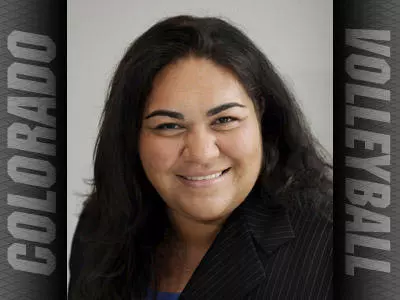
Q&A With Volleyball Coach Liz Kritza
February 25, 2009 | Volleyball
University of Colorado Head Volleyball Coach Liz Kritza recently sat down with CUBuffs.com for a quick question and answer session.
Q: How did going through Katrina put things in perspective for you?
A: The whole Katrina experience will remain one of the most amazing things I've ever encountered as a person and as a coach. When you are faced with such a human challenge, your chosen endeavor becomes your sense of normalcy. Nobody going through that can say that their main focus was their sport but was important because it allowed coaches and players to have control over some piece of their life. It helped me get a good perspective and helped me understand how important sport is in keeping balance in life. It's one of the tools that allow young people to develop into strong individuals and balanced individuals. It was a perfect example of how sport was used as a tool to help people develop.
Q: How hard was it to keep the team motivated and focused during the hurricanes?
A: There is something to be said for the ability young people have to refocus. I think focusing them on the positive was the only way through it and we definitely did that. We found the positive in their individual situations and in the community. Another important lesson we learned was there is so much you can't control. I couldn't control that my house had three feet of water in it but I could control my approach and my attitude about it. That's something that I'm really pleased I could share with my team at the time.
Q: How do you balance coaching volleyball and studying for a master's degree?
A: My career path into coaching has been somewhat unorthodox. I had a great opportunity that I grabbed with both hands and took. It's difficult, you have to manage your time and understand what your priority is. At any given moment you have to be able to compartmentalize and be completely engaged in what you are doing whether it is recruiting or you're in the office and with your team, and when you go to class you're completely engaged as a student. You have to wear a ton of different hats to be able to do that; I think that is what we require our student-athletes to do so it gave me a good perception of how to keep balance between athletics and academics because I was going through that myself as a student when I started coaching as an assistant.
Q: What initially drew you to Tulane as a student-athlete and kept you as a coach?
A: I went far away from home. I'm from Colorado, born and raised. I chose to go to Tulane at the time primarily because of the academic reputation and when I was looking at colleges I wanted a place that I could go and major in a strong natural science program. They had a very good pre-med program which was my intent coming out of high school going into college. I had the best of both worlds there. I started to realize that there were some unexplored opportunities athletically which is what led me to stay there and start coaching. It's a fantastic institution; it's my alma-mater. I'll always stay connected. It was a really good experience for me to go so far from home and experience a different culture. I completely grew as a person because of it. It was a really good adventure for me at the time- I was 17 years old, picked up and went to a very academically challenging institution.
Q: How hard was it to leave Tulane after the record season you just had?
A: This choice to leave was at the same time the most exciting but the toughest decision I've had to make. I've been in New Orleans and at Tulane and part of that community for 14 years. I have amazing friends. I have been so lucky to have encountered some of the most amazing professors and mentors and people to connect with in the community. I've had the honor of coaching some pretty incredible young women, especially through the last phase of my coaching there. It's a testament to my connection with them that when I told everyone I was leaving and coming back here the reaction was 100 percent positive. They knew how important it was for me at that point to make a change. They saw the opportunity that I saw here. I'll always have great affection for the city, I will always go back and I will always support Tulane, but this was the right thing for me to do personally and professionally.
Q: What does it mean for you coming back to Colorado?
A: There's a comfort factor going home. I grew up in Colorado Springs playing high school volleyball and club volleyball. It's amazing to me that I've been gone for 14 years but there's such a sense of familiarity. Colorado is a place that is truly unique and truly special and a lot of people end up coming here. When you're born and raised and from here you really understand what it is to be from here and the quality of life- just the kindness and generosity of people here. I was really looking forward to that. It is the happiest of homecomings for me because personally and professionally this is where I want to be.
Q: Do you plan to make any noticeable changes in the volleyball program?
A: First and foremost my predecessor, Pi'i Aiu, left very big shoes to fill. He remains a very close friend and colleague and I have the utmost respect for him. He has been extremely accommodating, he wants the program to do well and that means a great deal to me as the new coach coming in. On the recruiting front I think I may have some progressive ideas that would really focus on keeping the best players in Colorado, playing at CU. Even in the competition piece you'll see some changes, but I like the situation I'm coming into. There's a good tradition and a good history and sense of the level that Colorado volleyball should be performing at on a national stage. That's my intent; I came here to get us back there. We'll be back where we need to be while preserving all the best things about the program.
Q: What is your main focus coming into the season?
A: Improvement. I think that the institution and the administration here in athletics are completely invested in a successful program. We want to be competitive nationally. We're playing in the Big 12 which is fast becoming the toughest volleyball conference in the country. That's a huge positive because when you play against quality opponents night in and night out, you naturally get better. We're looking for success on the volleyball court and we're looking for success in the classroom. I will always have true student-athletes. I expect all of my players and my staff to really pursue excellence in all that they do. They will be very good people, very civic-minded. I feel that it's a responsibility when you're given a gift or the honor to play for a university such as the University of Colorado; you have an obligation to reach out into the community and mentor younger athletes and represent your program at all times to the best of your ability.
Q: How does the Big 12 compare to Conference-USA?
A: I am so ready for the jump and I'm so looking forward to it. There's a different approach that you take as a coach building the program in the Big 12 versus Conference USA. When you're in a conference like C-USA you have some scheduling challenges as you try to separate yourself from the league because if you don't then you have to schedule to counteract what is going on in your league. In the Big 12, the league is strong and it is tough. Some of the best volleyball in the country is played in Big 12 gyms. I'm looking forward to it because I'm extremely competitive. This is the stage where you truly test your skills as a coach and a player.
Q: CU has usually been a constant in the NCAA tournament, aside from the last few years. How do you go about getting back to the tournament?
A: We start these positive changes. I really believe wholeheartedly the University of Colorado has so many advantages and the volleyball team should be a perennial tournament team. That is the appropriate level for this program. To get the program back there we need to make some serious strides in recruiting and training and competing and teaching the players how to play at the highest level. We won't stop short of a championship- that is what we're working towards. It is going to be an exciting journey.
Q: Is it important to be able to relate to today's student-athlete to be able to get an understanding of who you are dealing with?
A: I think one of the greatest challenges that coaches' face is relating and understanding the interworking of an 18-22-year-old. It is an amazing opportunity because they present challenges every day- they challenge you and they question you. They are amazing young people that keep you on your toes. As coaches I feel like it is our job to mentor and educate them to be successful and stand on their own two feet. Make sure that they're disciplined but also making sure that they're creative and thinking, because when they're finished playing for me they'll go on to grad school or play professionally or go into the work force. They must understand that they are to be a functional part of society. My players know that I expect them to change the world in some capacity. Whatever your chosen endeavor is, you do it to the best of your ability all of the time and good things will happen.
Q: Colorado has plenty of volleyball programs that start at an early age. How important is it to encourage young girls to keep up with the sport?
A: Colorado is a veritable hotbed for recruiting but beyond that the sport is in a really strong place developmentally and I think that is largely in part to USA Volleyball and their grassroots effort to teach the sport to children at a young age. Volleyball is not an innate skill, sometimes the movements are unnatural or they seem awkward but if you start teaching the game to players and its fun and exciting, then the likelihood that they would stick with it and become accomplished players is higher. I will always give back to the sport and I really do feel like if you are a competitive collegiate program, it is your responsibility to carry your weight and help develop the sport in your region.
Q: How important is it to recruit in-state?
A: It is incredibly important. The two players that we have from Colorado, I'm so pleased that we have them on the roster because they are excellent examples of quality players who have chosen to come here. The best thing about it is their families get to come and see them play every home match. There are a significant amount of quality recruits in Colorado and it is an important statement to say that the best players in Colorado will be recruited by the University of Colorado. It just makes sense. We want to preserve the level of high-caliber volleyball in the state.
Q: When you are not coaching what keeps you busy?
A: I truly enjoy traveling and exploring other cultures to separate from the frantic pace of a college coach's life. I love reading a good book, or good music, good movies. Spending some time with family because that time is limited, so I really cherish the time I have with family and friends. I'm a very novice skier but I really do enjoy it.
Q: How does your family feel about this change?
A: My brother, Ted Kritza, who played basketball [at CU] enjoys his time here and when he came back for the press conference it was kind of a homecoming for him too. It's pretty fantastic that I can have such a great relationship and he has been a supporter through my career and personally. The tough times I had coming through my initial head coaching career at Tulane I leaned on him. I fully expect that he'll support me and the program here as well. Everyone is extremely excited and very happy.
Q: When the dust settles and you finally have time for yourself, what is the first thing you are going to do for you?
A: I'll be honest I haven't really though about something I would do. I'm getting great energy and great excitement out of the possibilities we have here. I look at every opportunity I have to change something positively. I'm looking forward to working hard day in and day out and seeing some positive changes. I have a very clear idea of where I'm going to take this program and the question that remains is one of timing. I know where we're going to be, we will be at the top of our conference, and we will compete nationally.
Kritza's Favorites
Food: Fruit and Sushi
Cuisine: Italian
Color: Black
Sport outside of volleyball: Basketball
Professional Athlete: Tiger Woods
Destination: Pacific Rim
TV Show: House
Movie: Maria Full of Grace
Type of Music: Jazz, Hip Hop
Book: Geography of Bliss