Colorado University Athletics
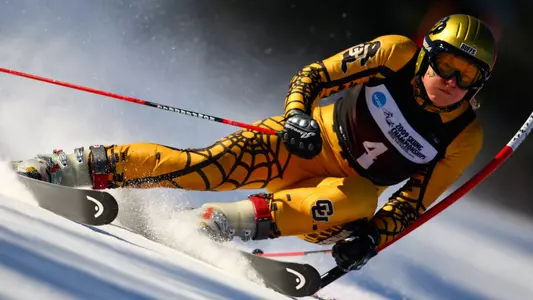
Skiers Ready For NCAA Championship Run
March 09, 2010 | Skiing
STEAMBOAT SPRINGS - The last time the Steamboat Springs Ski Resort served as the site for the NCAA Skiing Championships, host Colorado became the first school in history to win the title without fielding the maximum number of skiers.
That was in 2006; four years later, the sport's 57th convening to decide a national champion will once again take place in Steamboat, and again on two of the most famous hills in the sport, Mount Werner and Howelsen Hill.
Colorado is again hosting, and enters the meet as the nation's No. 1 ranked team by Ski Racing Magazine; but in this sport, being ranked at the top and also being the host school offers no guarantees. Any member of the latest top five, New Mexico, Dartmouth, Denver and Vermont, plan to have a say-so in matters, though UVM will have to do it with just 10 skiers instead of the full complement of 12; UNM is also handicapped a bit, skiing here with 11. Two others outside the top five, Alaska-Anchorage and Utah, are also contenders; the Utes also will field a full 12-skier team along with CU, DU and Dartmouth, while UAA will compete with 11.
Denver enters as the two-time defending champion, with the host Buffaloes the runner-up on the last two occasions. Dartmouth won in 2007, the first breakthrough by an eastern school to win the title 1994, but the championships have been owned by western schools, in particular DU (20 titles) and CU (16); throw in Utah (10 titles), Wyoming (two) and New Mexico (one), you have 49 of the previous 56 winners from the western region. In 11 previous championship meets held in the state of Colorado, an eastern school has never left with the trophy.
Colorado won three of the five western meets, including the Rocky Mountain Intercollegiate Association (RMISA) championship that also served as the NCAA West Regional. New Mexico captured the other two meets, while DU and UAA finished anywhere from second to fifth. The Seawolves were the surprise regional runner-up, and remained in the Steamboat area to continue training on the same tracks and trails for nationals. UNM skiers won 18 of the 45 races in the west this winter, followed by Denver (11), Colorado (7), Alaska (4), Utah (3) and Nevada (2); all six had at least one of their skiers crowned a regional champion.
In the east, Dartmouth won all six carnivals for the second straight year, including the Eastern Intercollegiate Ski Association (EISA) Championship/NCAA East Regional. The Big Green won the latter by 40 points, quite a bit less than the 168.5-point margin in 2009, perhaps showing a bit more balance in New England. Vermont finished second and Middlebury third for the second straight year; in fact, the Catamounts were second in all six eastern competitions this winter. The Big Green has continued to build off their 2007 NCAA championship: Dartmouth has now won 23 of the last 24 meets in the east, supplanting Vermont, which had won 11 of 12 prior to Dartmouth's run. A dominant performance by the Big Green in the women's 5K classical, one that saw six skiers place in the top 10 including the winner, Katie Bono, got Dartmouth into the first day lead. Vermont skiers claimed the men's 10k and the men's slalom, with New Hampshire taking the women's slalom. On day two, the Big Green again placed six women in the top 10 of women's 15k freestyle, with Ida Sargent the victor this time. Vermont had the winners in the other three races, both slaloms and the men's 20k free.
Six Central Collegiate Ski Association (CCSA) schools are also sending skiers to Steamboat, but they won't compete for the overall national title, as all six field Nordic-only teams. Northern Michigan qualified a full team (six skiers), and despite no alpine performers, the Wildcats have finished as high as eighth twice in the last decade (2001, 2007). And the central schools are always an unknown factor, often robbing expected points from their eastern and western brethren and upsetting the proverbial apple cart.
The hottest performers entering nationals appear to be Dartmouth's Ida Sargent (Nordic, seven wins, including five in the last seven races with a second and a third); Denver's Antje Maempel and Colorado's Matt Gelso (Nordic, both on four-race win streaks); Vermont's David Donaldson (east champ in both the giant slalom and slalom) and New Mexico's Anne Brusletto (Alpine, three straight slalom victories). Donaldson won seven races this winter, and teammate Meg Ryley won six for the Catamount women. Maempel won the most races in the west by any skier (seven), while UNM's Petter Brenna and Malin Hemmingsson each won four Alpine races this winter to help the Lobos to their most individual wins in the west.
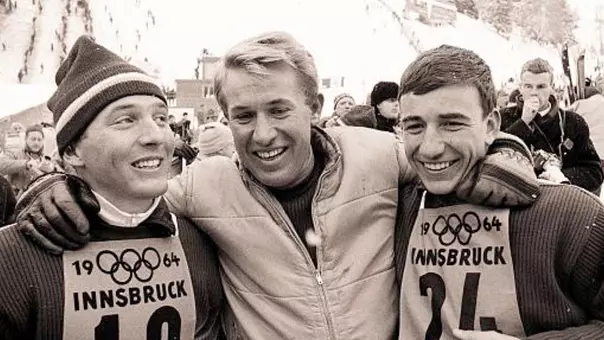
As for the host Buffaloes, head coach Richard Rokos is as optimistic as ever, feeling he has one of his best teams in his 20 years at the reins of the CU program. Colorado has also dedicated the season to the memory of former Buffalo Jimmie Heuga, who passed away on February 8 at the age of 66 after a nearly 40-year battle against multiple sclerosis.
"The team decided to dedicate the season to Jimmie's memory right after he passed away," Rokos said. "We are all making a solid effort to honor him in the best possible way. He was an inspiration to all of us, and he was an incredible athlete with great sportsmanship and morals."
CU's roster for the NCAA's breaks down into two seniors, six juniors, one sophomore and three freshmen, nearly matching the youngest squad CU will have at the NCAA's under Rokos (in 2007, no seniors and nine underclassmen represented the Buffs). Seven are Americans, tied for the most from the West with Utah (Denver has five), and eight of the 12 skiers have skied previously at nationals, led by seniors Gelso and Drew Roberts (Alpine) both of whom will be skiing in their fourth NCAA Championships, with one other, Jesper Ostensen (Nordic) appearing for a third time.
Four of the 12 will be skiing for the first time in an NCAA meet, three freshmen, Erika Ghent and Spencer Nelson (Alpine) and Joanne Reid and sophomore Elisa Hajkova, both Nordic performers. How the first-timers fare often will dictate a team's success or failure.
"Even skiers who came back to college after skiing for the U.S. ski team experience jitters in their first NCAA," Rokos said. "It's all in the approach, and the advice and support from their teammates is most important."
Junior Gabriel Rivas, CU's top alpine, is looking to defend his NCAA title in the slalom, while junior Vegard Kjoelhamar is looking to do the same in the freestyle. Rounding out the CU squad are juniors Carolina Nordh and Katie Hartman (both Alpine) and Alexa Turzian (Nordic), all three of whom ended the regular season with some of their best skiing.
Team morale is good, and Rokos feels the Buffaloes are peaking right now. "Things are going good for us. We're all in good spirits and looking forward to the upcoming events. All the qualifiers are healthy, with strong immune systems and no real injuries. We've had a very good year overall, and we're encouraged about our chances."
Colorado has qualified a full 12-skier team for the first time since 2007. "One thing that is easier for us is that we are competing with the maximum, so there are no deficiencies this year. We also have a lot more balanced team since the last time we won (2006). The men's alpine team stepped up considerably this season, and really balances things out more for us than in years past. The regional was our last attempt to qualify a full men's alpine team, and we came there with guys in the top the 17, but with a danger to be bumped out. They had a solid effort to counter the effort by Alaska. The NCAA championship is our goal and what we want to achieve, but it has been a most enjoyable year in terms of training, team chemistry and everything that goes with skiing."
And the team goals at the NCAA?
"The goals are the same. They will never change," Rokos said. "The one goal is to win it, but also to have a positive experience. Sportsmanship, achieve it under honorable conditions. I would hate to win it because we didn't ski our best, and it was because the others didn't ski their best. But the bottom line is like we say every year, our goal never changes, it's always the same, we're going after the trophy. We don't ever go into this thinking second place would be a great finish. The goal is to win, everybody knows it, and everyone will pursue it.
"We continue to get stronger in men's alpine, Nordic is solid and predictable. And as usual in alpine, it could come down to what team keeps falls and crashes to a minimum. Starting positions do not matter like they used to, since they flip the top 30 for the second run; in fact, it may not help is you have one of the fastest first run times as those will be skiing between the 25th and 30th positions now in an attempt to even things out for the entire field."
The current scoring format is in its second year of use, and was also adopted by the RMISA and EISA for their regular season meets. The formula is weighted to reward the top eight finishers, with the winner earning 50 points for their school, second place 47, third 44 and fourth 41; fifth earns 39, sixth 37, seventh 35 and eighth 33; ninth picks up 31, 10th earns 30, with each respective finish earning one point less (29-28-27-26, etc.).
The giant slalom races open the NCAA Championships on Wednesday, March 10, with the women's first run at 9 a.m. Mountain Time, with the second run to follow immediately at 10:30; the men's first run is set for 12:30 p.m., followed by its second run at 2:15 p.m. Nordic competition takes center stage on Thursday, March 11, with the classical cross country races, the women's 5-kilometer up first at 9:30 a.m., with the men's 10K to follow at 11:30 a.m. The slalom races complete the alpine events on Friday, March 12, with the return of the popular night races that were successful in 2006 at Steamboat; the men's first run is at 6:15 p.m. followed by the women's first run at 7:30; second runs follow at 8:25 (men) and 9:30 (women). The freestyle cross country races will finish off the NCAA meet on Saturday, March 13: the men's 20-kilometer is set for a 10 a.m. start, with the women's 15K to follow at Noon. Flower ceremonies follow each event, and the awards presentation is set for 1:30 p.m. on Saturday.
.