

Colorado University Athletics
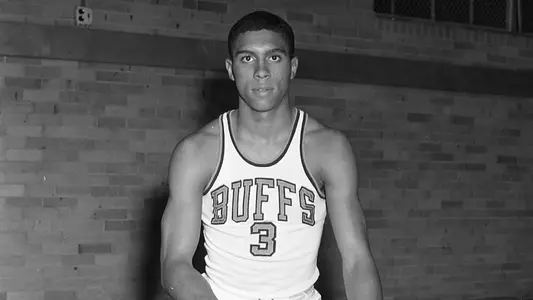
Chuck Williams averaged 18 points and 5.1 rebounds as a senior in 1967-68.
CU Athletic Hall of Fame Profile: Chuck Williams
November 08, 2018 | General, Men's Basketball
It's Hall of Fame Week for Colorado Athletics! The 11-member Class of 2018 will be inducted on Thursday, Nov. 8, at 6:30 p.m. at the Boedecker Gym in the CU Events Center, and will be recognized at Saturday's football game against Washington State at 1:30 p.m. Our sixth CU Athletic Hall of Fame Profile is Chuck Williams, who starred at guard at the high school, college and professional level in the state of Colorado.
It's not often someone can say they played basketball at the high school, collegiate, and professional level. Chuck Williams did that, and did it all in the state of Colorado.
Williams was born in Pittsburg, Calif., about 30 miles northeast of Oakland. When he was around the age of 6 or 7, he moved to Denver, where his journey to Colorado basketball greatness began.
At East High School in Denver, Williams starred in both basketball at guard and football as a two-way lineman, and was just as excellent in each. He won the 1962 state championship in football, the last in East's history, and two years later won a state championship for the historic boys basketball program. To go along with those two state championships, Williams is a member of the East High School Sports and Colorado High School Sports Hall of Fames.
"From an academic view and in sports, East was a top school at that time," Williams said. "We won state championships, and I still have friendships from that time period now."
Williams could have played either football or basketball in college. When he made the decision to play basketball, he just needed a place to do it. When he met then Colorado head coach Sox Walseth, there was no wavering.
"It was an easy decision for me to attend CU and play for Sox," Williams said.
During his time in Boulder, Williams was a big guard at 6-foot-2 who ran the team as the floor general. He was scrappy at both ends of the court, and his speed allowed him to run his team up and down the hardwood.
"I was always known as a very good passer and developed my game to be able to run a team in the pros," Williams said. "I was a point guard and was running the team; setting the plays up, putting people in the right position to get the plays going."
Williams did much more than just get his teammates involved. During his senior campaign, he was an honorable mention All-Big Eight Conference selection, where he averaged 18 points per game, second best on his team and seventh in the league. His big size for the position allowed him to snag 5.1 rebounds a game and if assists and steals where an official stat at the time, Williams would have been at the top of his team and the conference.
Perhaps his best performance came in Boulder on Feb. 28, 1968, against Iowa State. He went off for a career-high 38 points, which is tied for 13th on CU's single-game scoring list. In three years of playing in Boulder, he tallied 802 career points, a number that could have been even higher if it wasn't for a knee injury in his junior year that forced him to miss time.
"We weren't as successful, it was the Big Eight back then, but we were competitive", said Williams. "I have long standing friendships from those teams and from just being in Boulder. Boulder is a very unique place. I loved playing for Sox and got to know his family."
Following his senior season, he was selected in the sixth round of the 1968 NBA Draft by the Philadelphia 76ers, but he played his first six years of professional basketball in the ABA.
The ABA favored his game and foreshadowed what the current game would become; an up and down, flashy, long-distance shooting league. The game was dominated by guard and small forward play, opposed to the power forward and center dominated NBA. The league had many notable stars, including Julius Erving.
"It was an interesting, crazy, disco time period," Williams said. "Big afros, bell bottomed pants, platform shoes, and the whole stuff. I enjoyed my experience. There was a lot of not so great things, but a lot of great things that came out of great basketball like friendships. Even the guys you don't keep up with, there has been some things recently that has brought us back all together. You think about those times fondly."
He played professionally in Colorado for the first time as a Denver Rocket in 1971-72 and again in 1975-76 with the Denver Nuggets. During the 1975-76 season, he was selected as an All-Star and averaged 11 points, 4.7 assists and 1.5 steals per game.
After the ABA/NBA merger in 1976, he played 21 games for the Nuggets under championship winning coach Larry Brown and played alongside basketball Hall of Famers David Thompson and Dan Issel (along with Bobby Jones who Williams urges should be in there with them). He represented the state of Colorado in 184 total games with the Denver Rockets/Nuggets in the ABA and NBA.
His time at East High School, CU, and the Rockets/Nuggets puts him in a unique class. He was able to achieve something very few can in playing basketball at those three levels, and it all came at the place he moved to when he was just a young boy.
"It was a bit surreal to go from high school, college, and play on the professional level in the same state", said Williams. "You just don't see that."
It's not often someone can say they played basketball at the high school, collegiate, and professional level. Chuck Williams did that, and did it all in the state of Colorado.
Williams was born in Pittsburg, Calif., about 30 miles northeast of Oakland. When he was around the age of 6 or 7, he moved to Denver, where his journey to Colorado basketball greatness began.
At East High School in Denver, Williams starred in both basketball at guard and football as a two-way lineman, and was just as excellent in each. He won the 1962 state championship in football, the last in East's history, and two years later won a state championship for the historic boys basketball program. To go along with those two state championships, Williams is a member of the East High School Sports and Colorado High School Sports Hall of Fames.
"From an academic view and in sports, East was a top school at that time," Williams said. "We won state championships, and I still have friendships from that time period now."
Williams could have played either football or basketball in college. When he made the decision to play basketball, he just needed a place to do it. When he met then Colorado head coach Sox Walseth, there was no wavering.
"It was an easy decision for me to attend CU and play for Sox," Williams said.
During his time in Boulder, Williams was a big guard at 6-foot-2 who ran the team as the floor general. He was scrappy at both ends of the court, and his speed allowed him to run his team up and down the hardwood.
"I was always known as a very good passer and developed my game to be able to run a team in the pros," Williams said. "I was a point guard and was running the team; setting the plays up, putting people in the right position to get the plays going."
Williams did much more than just get his teammates involved. During his senior campaign, he was an honorable mention All-Big Eight Conference selection, where he averaged 18 points per game, second best on his team and seventh in the league. His big size for the position allowed him to snag 5.1 rebounds a game and if assists and steals where an official stat at the time, Williams would have been at the top of his team and the conference.
Perhaps his best performance came in Boulder on Feb. 28, 1968, against Iowa State. He went off for a career-high 38 points, which is tied for 13th on CU's single-game scoring list. In three years of playing in Boulder, he tallied 802 career points, a number that could have been even higher if it wasn't for a knee injury in his junior year that forced him to miss time.
"We weren't as successful, it was the Big Eight back then, but we were competitive", said Williams. "I have long standing friendships from those teams and from just being in Boulder. Boulder is a very unique place. I loved playing for Sox and got to know his family."
Following his senior season, he was selected in the sixth round of the 1968 NBA Draft by the Philadelphia 76ers, but he played his first six years of professional basketball in the ABA.
The ABA favored his game and foreshadowed what the current game would become; an up and down, flashy, long-distance shooting league. The game was dominated by guard and small forward play, opposed to the power forward and center dominated NBA. The league had many notable stars, including Julius Erving.
"It was an interesting, crazy, disco time period," Williams said. "Big afros, bell bottomed pants, platform shoes, and the whole stuff. I enjoyed my experience. There was a lot of not so great things, but a lot of great things that came out of great basketball like friendships. Even the guys you don't keep up with, there has been some things recently that has brought us back all together. You think about those times fondly."
He played professionally in Colorado for the first time as a Denver Rocket in 1971-72 and again in 1975-76 with the Denver Nuggets. During the 1975-76 season, he was selected as an All-Star and averaged 11 points, 4.7 assists and 1.5 steals per game.
After the ABA/NBA merger in 1976, he played 21 games for the Nuggets under championship winning coach Larry Brown and played alongside basketball Hall of Famers David Thompson and Dan Issel (along with Bobby Jones who Williams urges should be in there with them). He represented the state of Colorado in 184 total games with the Denver Rockets/Nuggets in the ABA and NBA.
His time at East High School, CU, and the Rockets/Nuggets puts him in a unique class. He was able to achieve something very few can in playing basketball at those three levels, and it all came at the place he moved to when he was just a young boy.
"It was a bit surreal to go from high school, college, and play on the professional level in the same state", said Williams. "You just don't see that."


Tuesday, June 02
Tuesday, June 02
Thursday, May 21
Thursday, May 21